

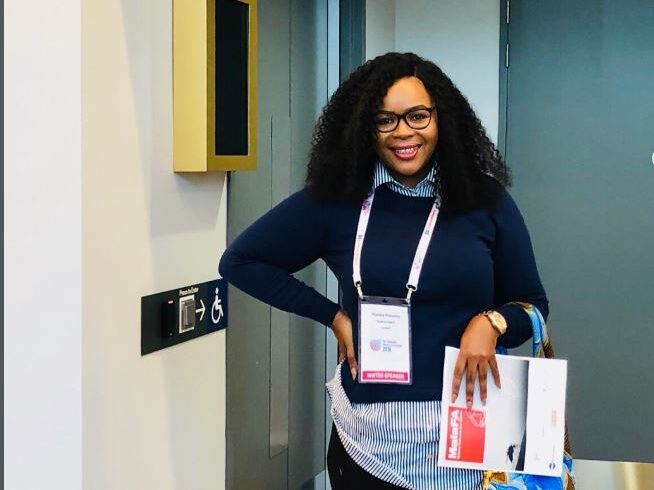

In the crisp morning air of Windhoek, Phelele “Pi” Fakudze begins her day with a mission larger than herself. As Head of Advocacy and Partnerships at the SADC Malaria Elimination 8 Secretariat, she is part of an ambitious regional push to eliminate malaria in southern Africa by 2030, a goal that demands political courage, financial investment and relentless collaboration.
Yet her path to public health leadership was anything but conventional.
“I studied Neurobiology because I thought I was going to be a doctor,” she says with a playful honesty. “But I can’t even take a dead fish out of my own tank.”
The dream of becoming a clinician slowly gave way to something more systemic. Through volunteering in a youth HIV prevention programme and later at a drug rehabilitation centre, she encountered communities grappling with poverty, stigma and limited access to services. Those experiences shifted her focus from individual treatment to population-level solutions.


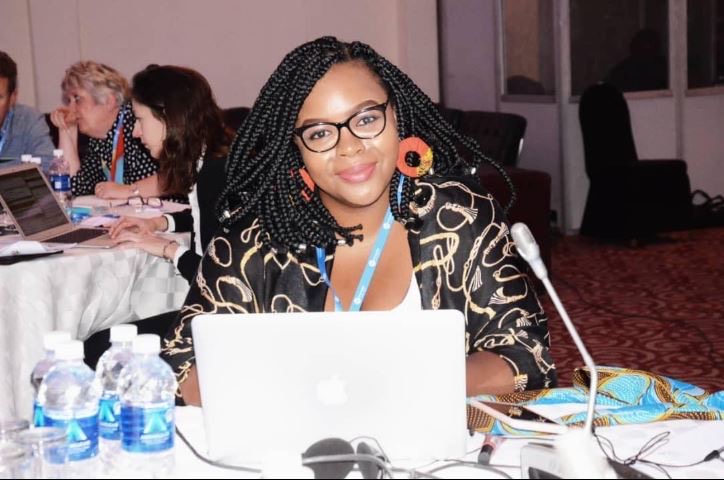
She realised that long-term health outcomes are shaped not only by medicine, but by policy, funding, infrastructure and political will.
Today, her role places her at the intersection of science and strategy. The Southern African Development Community (SADC) region has committed to a malaria-free future. But eliminating malaria is not simply about distributing mosquito nets or medication. It requires seamless cross-border systems to prevent parasite transmission, harmonised surveillance data, strong health institutions and leaders willing to prioritise public health in national budgets.
Phelele’s work involves convincing policymakers, coordinating technical partners and securing financial commitments.
She builds bridges between governments, donors, researchers and communities, ensuring everyone moves in the same direction. It is high-level, high-pressure work often conducted in boardrooms dominated by senior male politicians and bureaucrats.
“Working in a space that combines health technicalities and political activism means I’ve had to build intellectual trust,” she explains. “I had to grow my confidence and reputation so that when I speak, the room listens.”





Being young, creative and ambitious in traditionally rigid systems presents its own challenges. Proposing new technologies in environments accustomed to paper-based processes can take years of negotiation.
Changing how things have “always been done” demands resilience and emotional intelligence. At times, progress feels slow. But she measures success in momentum in incremental policy shifts, in new funding commitments, in strengthened regional cooperation.
Originally from the Eswatini, Phelele brings over 15 years of experience in generating data for evidence-based decision-making, driving policy reform and crafting strategic communications that influence leadership. Her work extends beyond malaria elimination to broader themes of population health, women’s empowerment, child survival and sustainable development.
She firmly believes that science remains central to Africa’s future. For her, investing in women and girls in science, technology and research is not simply about representation, it is about unlocking untapped potential that strengthens economies and societies. She serves on governing boards that support scholarships for young women entering traditionally male-dominated fields such as science and technology.
“Every woman has something they excel in,” she says. “No singular person can do it all. We must support each other so that all our collective strengths can thrive.”


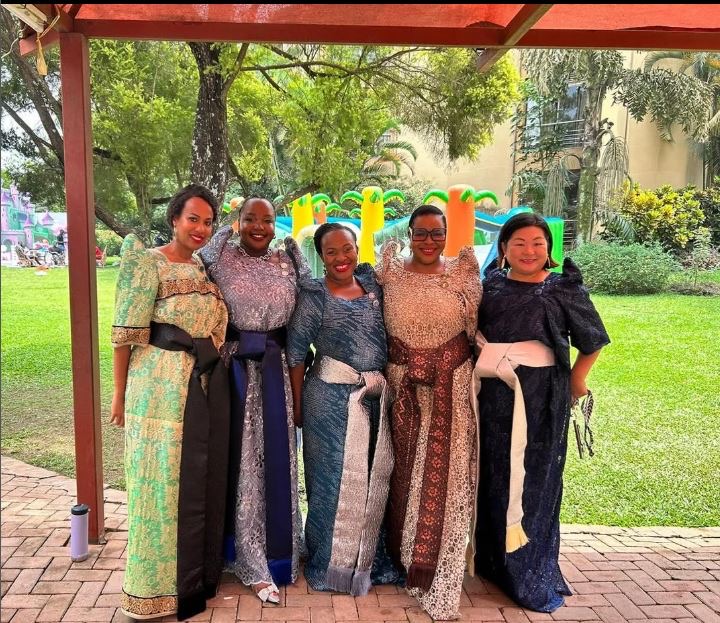
Travel has been one of the most enriching aspects of her career. From Dakar to San Francisco, Lusaka to Melbourne, Polokwane to Geneva, she has witnessed firsthand how different nations tackle shared challenges. These global engagements have broadened her perspective and reinforced her belief that collaboration across borders is essential for meaningful impact.
Outside of policy briefs and diplomatic meetings, Phelele is unapologetic about embracing the rewards of her hard work.
“I like things,” she says candidly. “I don’t short-change my comfort.” For her, there is no contradiction between purpose and prosperity. A fulfilling career should provide both impact and personal enjoyment.
Still, she acknowledges the pressures of corporate culture. “It’s very easy for corporate culture to deplete you mentally and physically,” she reflects. “Work on yourself before corporate culture works on you.” Self-awareness, boundaries and continuous self-development are essential tools in sustaining long-term leadership.
Her advice to young women and aspiring public health professionals is both simple and profound: “Just start. Start where you are. Start with what you have. Write that proposal. Take the free course. Join the online conversation. Never stay silent about issues that affect you.”
Much of her own journey has required leaps of faith — moving across borders, applying for positions she once felt intimidated by, and stepping into rooms where she had to grow into her authority. Each risk expanded her capacity.

“Take the leap,” she says. “See what happens. Never settle.”
In a region determined to end malaria and in a continent redefining its leadership landscape, Phelele “Pi” Fakudze embodies what modern African leadership looks like: bold yet thoughtful, strategic yet compassionate, ambitious yet grounded. Her story is a reminder that meaningful change is driven not only by policy documents and funding frameworks, but by individuals willing to use their voice, claim their space and believe in the power of possibility.