




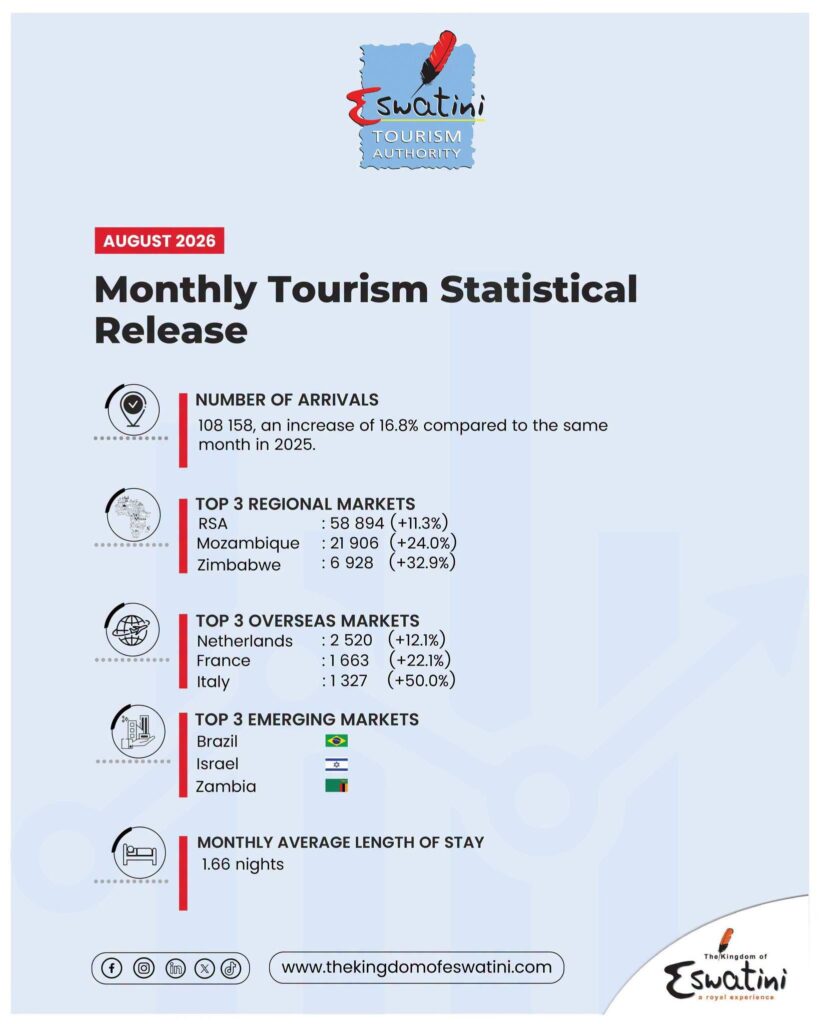
International visitor arrivals to Eswatini rose by 16.8% year on year to 108,158 in August 2026, driven largely by regional markets. This second part of the review looks at performance by source region and the year-to-date position.
This is according to the latest report from Eswatini Tourism Authority (ETA) statistics report.
Africa dominated international visitor arrivals to the Kingdom, accounting for approximately 87.5% of total arrivals in August 2026.
Arrivals from the region increased from 80,858 in August 2025 to 94,656 in August 2026, representing a 17.1% year-on-year increase.






South Africa remained Eswatini’s largest source market, recording 58,894 arrivals, an increase of 11.3%. The market accounted for more than half of all international arrivals during the month.
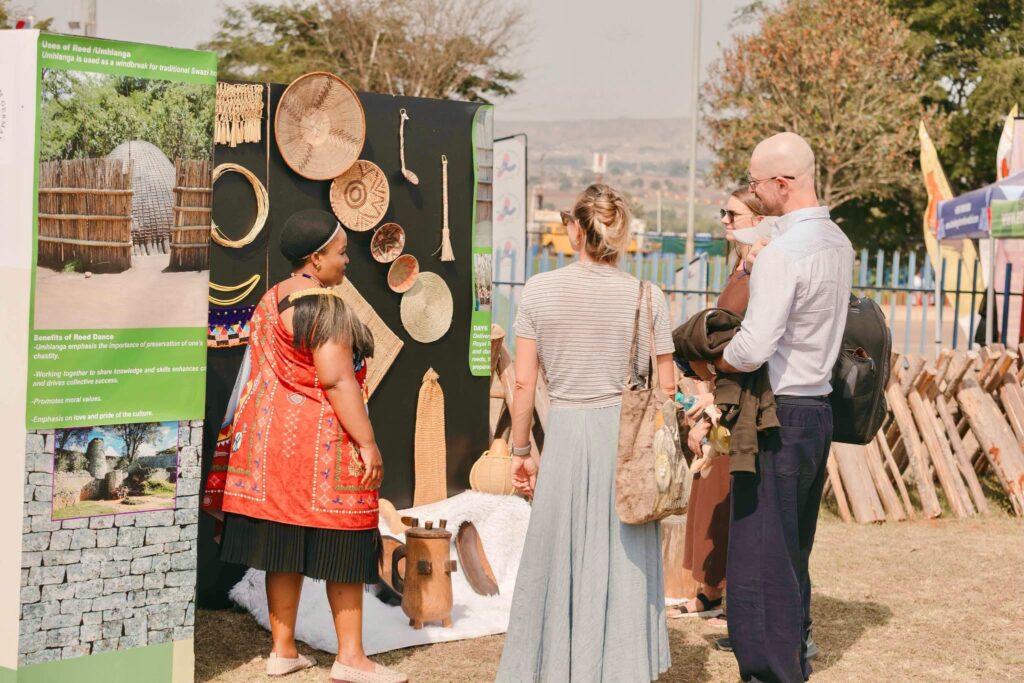
Its performance reflects the continued importance of geographical proximity, established road connectivity and Eswatini’s active August events calendar, including the Swazi Bikers Rally and Umhlanga Reed Dance.
Mozambique also recorded strong growth, with arrivals increasing from 17,664 to 21,906, representing a 24.0% increase.
The performance coincided with Eswatini’s events-calendar tourism activation in Maputo, which engaged Mozambican tourism stakeholders, travel trade and media. The activation promoted major events such as Umhlanga and the Swazi Bikers Rally, while highlighting the Eswatini–Mpumalanga–Mozambique tourism route.


Other regional markets also recorded notable increases, including Lesotho (+31.4%), Botswana (+36.0%), Zambia (+36.6%) and Tanzania (+6.6%). These results reinforce the importance of regional connectivity, cross-border travel and events-led tourism to Eswatini’s inbound tourism performance.
The North and South American market recorded a 10.0% increase, with arrivals rising from 1,239 in August 2025 to 1,363 in August 2026. The United States remained the largest market in the region, increasing by 9.4% to 1,044 visitors. Brazil recorded a notable 41.2% increase, although from a lower volume of visitors, while Canada recorded a marginal decline of 1.1%.
Arrivals from Asia and the Pacific increased marginally by 1.2% during the review period. India recorded a positive increase of 10.8%, reaching 717 visitors. South Korea and Taiwan also recorded growth of 16.3% and 10.0%, respectively, while the Philippines recorded a 38.2% increase.
This positive movement was partly offset by declines from China (-21.9%) and Australia (-12.7%), indicating mixed performance across the region.
The Middle East recorded the highest percentage growth among the regional markets in August 2026, increasing by 24.1% year-on-year. However, the region remains a relatively small source market for Eswatini and therefore made a limited contribution to total inbound arrivals. The increase included a notable rise in arrivals from Israel, which increased by 250.0%, while other Middle Eastern markets recorded declines.





Europe remained Eswatini’s second-largest regional source market and recorded strong growth during August. Arrivals increased from 7,954 in August 2025 to 9,533 in August 2026, representing a 19.9% increase.
Several major European markets contributed to the positive performance. Italy recorded the strongest growth among the major markets, with arrivals increasing by 50.0%. France increased by 22.1%, Germany by 23.5% and Belgium by 36.5%. The Netherlands, Eswatini’s largest European source market during the month, recorded a 12.1% increase.
Other European markets also performed strongly, increasing by 41.9%, from 952 to 1,352 visitors. These increases more than offset declines recorded in the United Kingdom (-17.0%), Portugal, Switzerland and Norway.
Year-to-date Performance
Meanwhile, the year-to-date performance remained strongly anchored in the African market, with arrivals from the region increasing by 10.9% to 697,594 during the eight-month period of 2026.
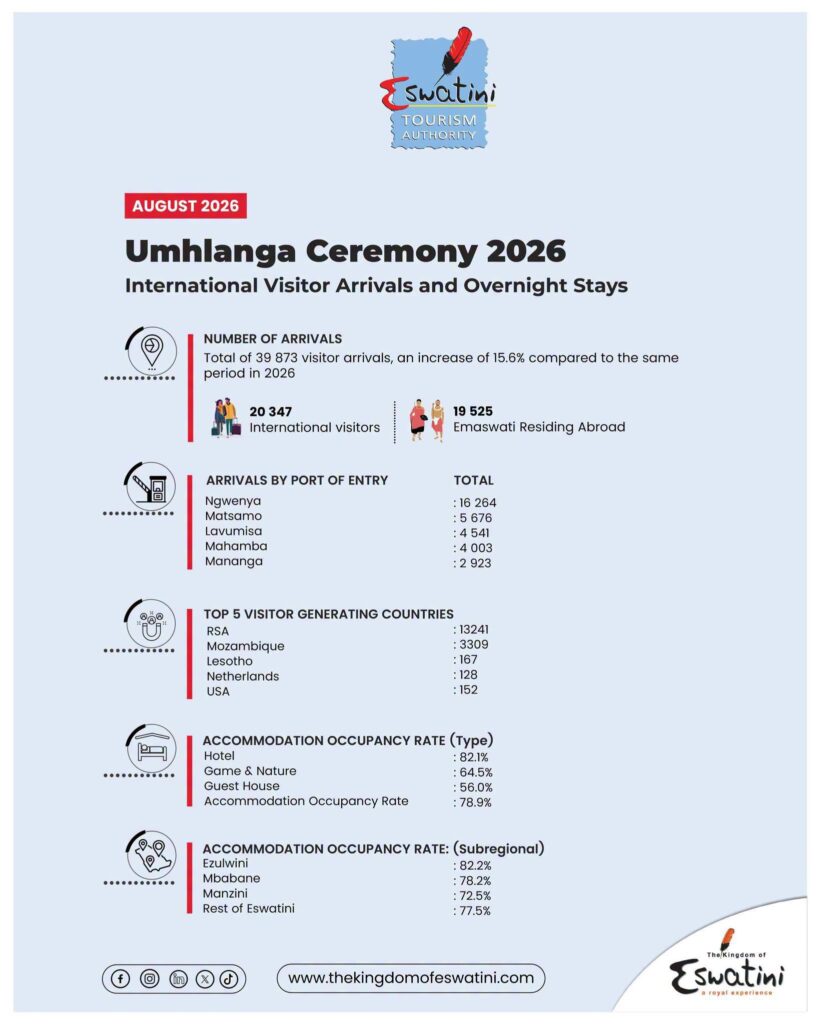
South Africa remained the largest source market with 428,976 arrivals, followed by Mozambique with 163,038. Collectively, the African market accounted for approximately 90.4% of total international visitor arrivals during the period, underscoring the continued importance of regional travel to Eswatini’s inbound tourism performance.